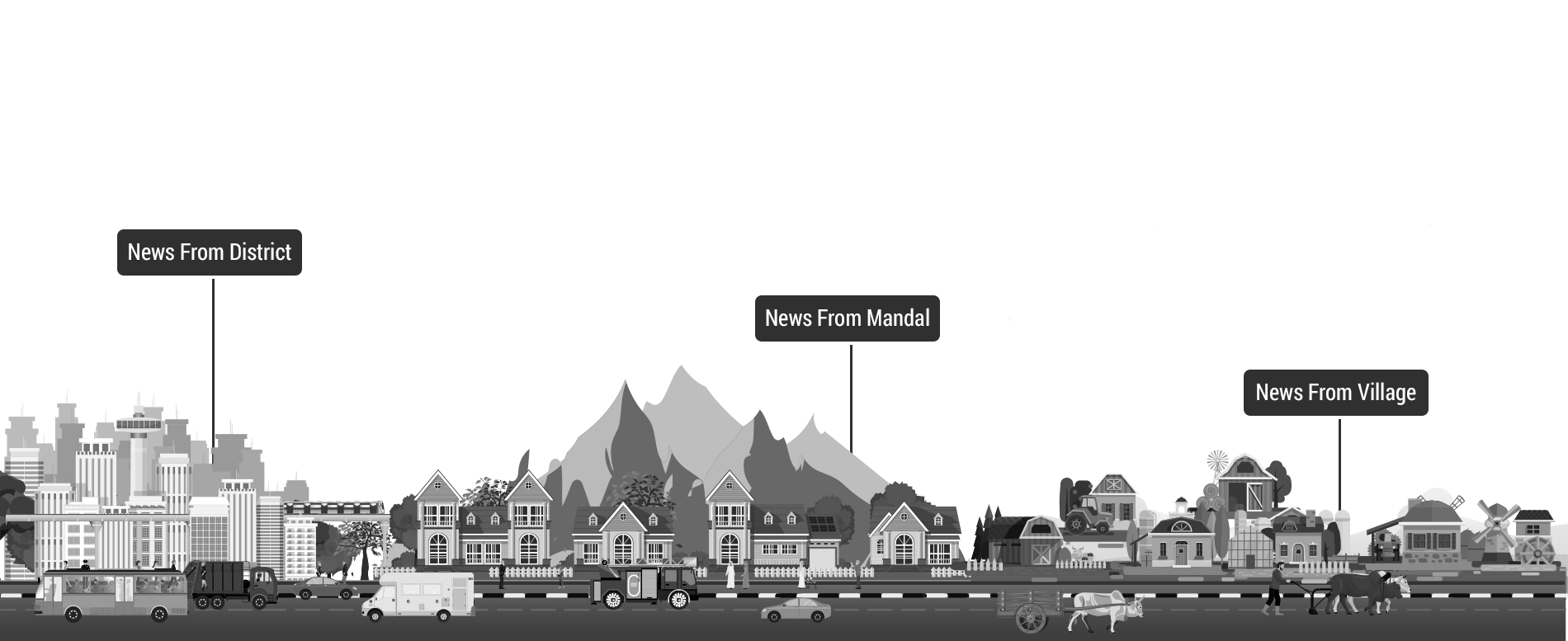
Way2News, India's largest hyperlocal news app covers news from 400 districts and generating more than 4 billion screen views every month - that's 3 times the entire Indian population. Gone are the days when "entertainment" meant a

Let your friends read the news you intend to share with them.
Travel, Health, Finance & many more- Pick Magazines of your favourite topic and lay back to read.
Cinema, Business or sports, read the News from the category of your preference.
Reading in dark? Then make it better for your eyes with 'Night Mode'
Read the News articles at ease by just flipping them up and down.
Participate in Polls on different issues and contribute your opinion to country wide taken stats.
Read the most trendy and widely shared flips from 'Top Buzz'.
Save the articles you want to revisit by adding them to 'My bookmarks'.
Way2News brings real time news. We understand your reading preference and promise to deliver personalized news flips.

Gone are the days when "entertainment" meant a passive escape. Today, it is a dynamic, bi-directional engine that dictates fashion, politics, language, and even morality. To understand the 21st century, one must first understand the algorithms, franchises, and narrative trends that constitute our media diet. For the latter half of the 20th century, popular media was a monoculture. If you asked someone in 1995 what they watched last night, the answer was likely Seinfeld , ER , or the evening news. Entertainment was a shared civic space—a "watercooler" moment that bonded strangers.

Because the mirror is no longer passive. It is watching us back. And it is learning how to keep us entertained forever. About the Author: This article is part of a series on digital culture and the attention economy. For more analysis on how media shapes behavior, subscribe to the newsletter.
Why? In a fragmented market, nostalgia is the only reliable aggregator. A new superhero nobody has heard of is a gamble. Spider-Man: No Way Home , which weaponized cameos from past decades, is a sure thing. This trend has created a unique cultural feedback loop: The most successful stories are those that reference other stories. We no longer watch a movie; we watch a wiki page come to life.
Gone are the days when "entertainment" meant a passive escape. Today, it is a dynamic, bi-directional engine that dictates fashion, politics, language, and even morality. To understand the 21st century, one must first understand the algorithms, franchises, and narrative trends that constitute our media diet. For the latter half of the 20th century, popular media was a monoculture. If you asked someone in 1995 what they watched last night, the answer was likely Seinfeld , ER , or the evening news. Entertainment was a shared civic space—a "watercooler" moment that bonded strangers.
Because the mirror is no longer passive. It is watching us back. And it is learning how to keep us entertained forever. About the Author: This article is part of a series on digital culture and the attention economy. For more analysis on how media shapes behavior, subscribe to the newsletter.
Why? In a fragmented market, nostalgia is the only reliable aggregator. A new superhero nobody has heard of is a gamble. Spider-Man: No Way Home , which weaponized cameos from past decades, is a sure thing. This trend has created a unique cultural feedback loop: The most successful stories are those that reference other stories. We no longer watch a movie; we watch a wiki page come to life.