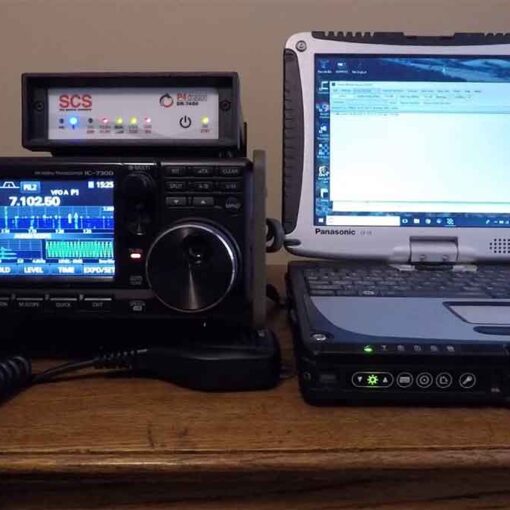
What is PACTOR? PACTOR (or now called PACTOR I) arose to cover the shortcomings of PACKET and AMTOR. It behaves very well […]
Tl-wr850n V3 Firmware India <iOS Instant>
The Indian firmware is, in essence, a minimal viable product. It lacks the advanced security patches (e.g., against KRACK or FragAttacks) that global versions received years ago. It offers no VPN passthrough that works reliably with Indian ISP throttling. Its administration interface, a clunky Java-script dependent portal, feels like a time capsule from 2012. This is not an accident; it is a deliberate product segmentation. For TP-Link, the Indian market is a volume game. The firmware’s job is to survive the warranty period, not to secure a user’s financial UPI transactions or protect a work-from-home professional’s data. The most profound implication of the WR850N v3’s firmware stagnation is the security vacuum it creates. Millions of these routers remain active in Indian households, small offices, and public Wi-Fi hotspots. Because the official firmware for the v3 revision ceased receiving updates around 2017-2018, these devices are sitting ducks. They are vulnerable to remote code execution, DNS hijacking, and botnet recruitment (into Mirai-like swarms).
In the sprawling digital topography of India, where high-speed fiber optic cables coexist with temperamental 4G signals and intermittent power cuts, the humble router often serves as the unacknowledged gatekeeper of aspiration. Among the most ubiquitous of these gatekeepers is the TP-Link TL-WR850N. Specifically, the v3 hardware revision of this device, when examined through the lens of its firmware ecosystem in India, reveals a compelling narrative far beyond simple network connectivity. It is a story of technological obsolescence, security neglect, and the quiet stratification of India’s internet experience—a case study in how budget hardware becomes a vector for digital vulnerability. 1. The Anatomy of an Icon: Hardware Capabilities vs. Market Reality The TL-WR850N v3 is, by any modern standard, an artifact. It is a 2.4 GHz single-band router based on the 802.11n (Wi-Fi 4) standard, boasting theoretical speeds of 300 Mbps. In its original packaging, it promised stable connectivity for a small home or a modest café. For the Indian market in the mid-2010s, this was a revolutionary product: it was affordable, readily available on Flipkart and local computer bazaars from Lamington Road in Mumbai to SP Road in Bengaluru, and perfectly suited for BSNL’s 10 Mbps plans or ACT Fibernet’s introductory offerings. tl-wr850n v3 firmware india
This transforms the router from a user-owned device into a network endpoint controlled by the last mile provider. The “India” in the firmware title thus signifies a specific regulatory and commercial environment—one where the ISP, not the user, holds the encryption keys. In such an environment, the WR850N v3 is not a router; it is a leased access point for data harvesting and traffic shaping. The TL-WR850N v3, running its archaic Indian firmware, is a ghost in the machine of India’s digital revolution. It is a monument to planned obsolescence and a silent accomplice in cyber insecurity. For the privileged user in a tier-1 city, this router is an annoyance—a reason to upgrade to a dual-band Mesh system from Amazon. But for the student in a tier-3 town relying on this router for online exams, for the small shopkeeper using it for digital payments, or for the family whose only entertainment is streaming, this device is a critical piece of infrastructure. The Indian firmware is, in essence, a minimal viable product
Furthermore, the closed nature of the v3 firmware prevents the community from patching it. Unlike older Atheros-based versions that run OpenWrt, the v3’s Realtek chipset has poor driver support. Attempting to flash custom firmware often “bricks” the device, turning it into a useless green-and-black plastic brick. Thus, the Indian user is trapped: the official firmware is a security hazard, and the community cannot save them. Indian ISPs exacerbate this firmware crisis. When a user subscribes to a local ISP (e.g., Excitel, Hathway, or a local cable-wala provider), the bundled router is often a refurbished or rebadged TL-WR850N v3. These ISPs lock the firmware further, disabling bridge mode, blocking custom DNS settings (to force their own ad-injecting portals), and even hiding the admin login page. The firmware becomes a captive portal to the ISP’s walled garden. The firmware’s job is to survive the warranty



One thought on “Yaesu FTDX-10, FT8 & JTDX”
Hello
Well I have to say you are the only person on the web that knows how to tell people how to set up the FTdx10 and the computer… I watched many videos and read many articles and none worked for me… I gave up and my son found your article abt setting it up and had the thing running in abt 40 minutes… I’m going to be using the radio in a remote location 50 km away… Thank you for the great info…
Good DX and 73
Fred W0PE
I have passed your link to a bunch of people…