


Sneak, Hide & Outsmart to Escape!


Customize Your Purr-fect Cat!
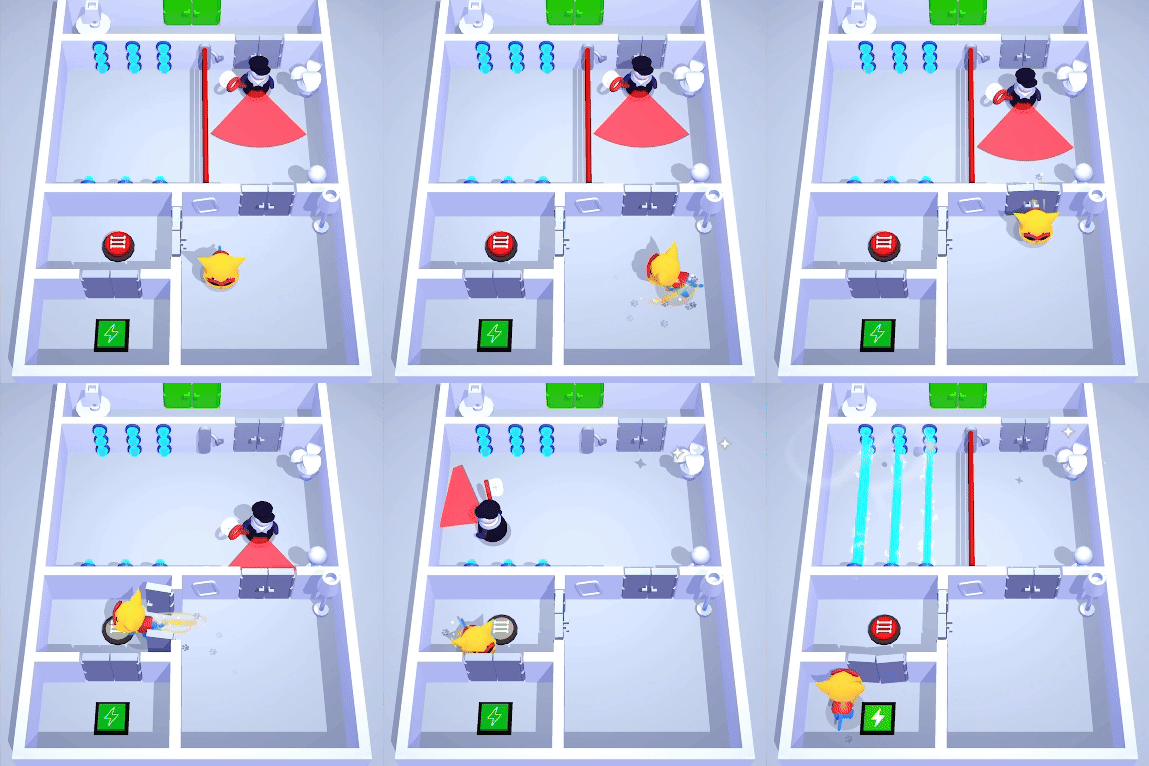
Brain-Teasing Levels Await!

Navigate Challenging Puzzles!
The city is a crucible of humidity and decay. The old Faubourg Marigny theater, shuttered since the 1920s, is weeks from demolition. LEO (26) , a quiet, chain-smoking film student with a failed relationship behind him, takes a summer job cataloging the theater’s nitrate film archive. He’s drawn to lost things—the crackle of old celluloid, the smell of dust and rust.
The Heat of a Shade
Carmen doesn’t speak at first. She communicates through touch and memory. Each night, Leo returns to the projection booth, and she grows more real. Her ghostly rules become clear: she can only materialize where the old nitrate film is close by, and only when the temperature crosses 95°F—the heat of the projector lamp, the heat of the New Orleans summer. erotic ghost story 1990
A wrecking crew arrives at dawn. Elaine begs Leo to leave. Carmen appears in the lobby, fully opaque now, breathtakingly alive. She offers him a choice: stay with her forever in the collapsing theater, buried alive in a kiss as the walls come down, or walk out into the harsh, air-conditioned light of the 1990s—safe, but alone. The city is a crucible of humidity and decay
Leo discovers the final reel of Carmen’s only film—buried beneath a floorboard. On it, a title card reads: “Carmen Silvera, strangled on set by her jealous director, August 15, 1927. The camera kept rolling.” The footage shows her real death: a man’s hands around her throat, her body going slack, then a strange, ecstatic smile as she chooses to die rather than leave the theater. He’s drawn to lost things—the crackle of old
A cool breath on his neck. The phantom brush of fingertips down his spine. He turns. She is there, half in shadow—a woman of moonlight and static electricity. Translucent at the edges, but solid where it matters. Her smile is a wound.
The city is a crucible of humidity and decay. The old Faubourg Marigny theater, shuttered since the 1920s, is weeks from demolition. LEO (26) , a quiet, chain-smoking film student with a failed relationship behind him, takes a summer job cataloging the theater’s nitrate film archive. He’s drawn to lost things—the crackle of old celluloid, the smell of dust and rust.
The Heat of a Shade
Carmen doesn’t speak at first. She communicates through touch and memory. Each night, Leo returns to the projection booth, and she grows more real. Her ghostly rules become clear: she can only materialize where the old nitrate film is close by, and only when the temperature crosses 95°F—the heat of the projector lamp, the heat of the New Orleans summer.
A wrecking crew arrives at dawn. Elaine begs Leo to leave. Carmen appears in the lobby, fully opaque now, breathtakingly alive. She offers him a choice: stay with her forever in the collapsing theater, buried alive in a kiss as the walls come down, or walk out into the harsh, air-conditioned light of the 1990s—safe, but alone.
Leo discovers the final reel of Carmen’s only film—buried beneath a floorboard. On it, a title card reads: “Carmen Silvera, strangled on set by her jealous director, August 15, 1927. The camera kept rolling.” The footage shows her real death: a man’s hands around her throat, her body going slack, then a strange, ecstatic smile as she chooses to die rather than leave the theater.
A cool breath on his neck. The phantom brush of fingertips down his spine. He turns. She is there, half in shadow—a woman of moonlight and static electricity. Translucent at the edges, but solid where it matters. Her smile is a wound.